New Zealand is not only famous for its stunning natural landscapes but is also home to one of the world’s leading education systems. If you are considering relocating with your family on a work visa and are looking for an advanced, friendly learning environment for your children, New Zealand is definitely a destination worth exploring.
Let’s discover why New Zealand’s education is highly rated and what you need to know about bringing your children to study here.
1. New Zealand’s High Global Education Ranking (2025)

According to recent reports from the OECD and the QS World University Rankings 2025, New Zealand consistently ranks among the top 20 countries globally for quality education.
Evaluation criteria include teaching quality, flexible curricula, global integration opportunities, and high student satisfaction.
New Zealand is particularly praised for fostering critical thinking, problem-solving skills, and preparing students to be global citizens.
2. New Zealand’s Education System
New Zealand’s education system is clear and accessible for international students, comprising three main levels:
Primary and Intermediate School (Ages 5 – 12)
Focuses on developing literacy, numeracy, creativity, and critical thinking skills.
Secondary School (Ages 13 – 18)
Students follow the National Certificate of Educational Achievement (NCEA) programme, globally recognised and designed to prepare them for university or the workforce.
Universities and Institutes of Technology
New Zealand has 8 public universities, all ranked within the top 3% globally.
Additionally, there are numerous vocational and specialist research institutes.
3. Top-Ranked Schools and Universities in New Zealand
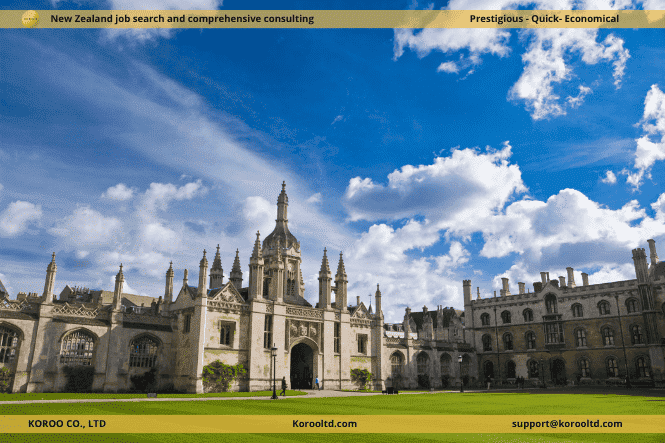
New Zealand’s strong education reputation is well-earned, thanks to its renowned institutions, such as:
- University of Auckland – consistently ranked in the world’s top 100.
- University of Otago – well-known for medicine and science programmes.
- Victoria University of Wellington – leading in social sciences and humanities.
- University of Canterbury – excelling in engineering and technology.
In addition, primary and secondary schools in New Zealand regularly meet high standards, as assessed by the Education Review Office (ERO).
4. Government Support for Education and Migrant Families
New Zealand provides various forms of support for migrant families:
- Children of long-term work visa holders or permanent residents can attend public schools like local New Zealand students.
- Subsidised tuition for primary and secondary public school students.
- Free English language support programmes for international students.
- A multicultural learning environment that encourages integration.
5. How Can Migrant Workers’ Children Study in New Zealand?
If a migrant worker holds a long-term work visa, their children may be eligible for a dependent Student Visa.
The basic steps include:
- Providing documents to prove the family relationship.
- Submitting a visa application for the children.
- Choosing an appropriate school—either public or private.
New Zealand’s education system is welcoming to international students, with dedicated support teams to help families with the enrolment process.
>>>>> Living With Family in New Zealand 2025
6. Education Costs for Migrant Families in New Zealand
Education costs for children depend on the type of school and level of education:
- Public schools – Free or very low-cost for children of long-term work visa holders or permanent residents.
- Private schools – Tuition fees range from NZD 12,000 to NZD 25,000 per year, depending on the school and level.
- Additional costs – Uniforms, textbooks, extracurricular activities (approx. NZD 500 – NZD 1,500 per year).
Compared to other developed countries, education costs in New Zealand are quite reasonable while maintaining a consistently high international standard.
A Great Choice for Families
New Zealand is an ideal destination for families looking to settle and provide their children with a high-quality, safe, and friendly education environment. With its advanced education system, supportive policies, and affordable costs, New Zealand continues to attract many international families seeking long-term opportunities for living and learning.
>>>>> Working in New Zealand: 2025 Updates on Overseas Employment Opportunities for Vietnamese Workers
>>>>> Accredited Employer Work Visa (AEWV) and things to know
If you would like more detailed advice on work visa applications and the process of bringing your children to study in New Zealand, CONTACT US today for expert support.