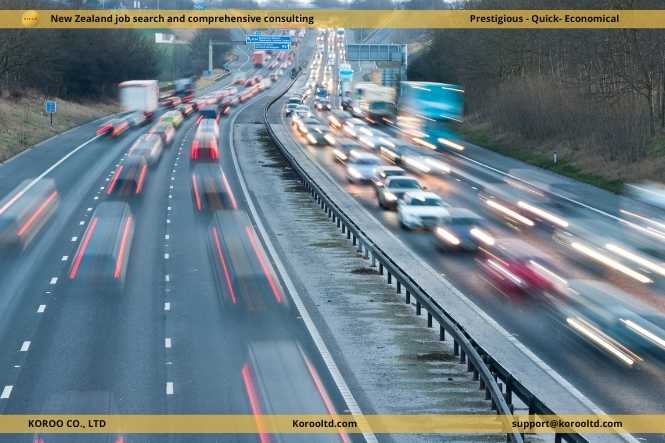
New Zealand – The government is moving closer to replacing the petrol tax with an electronic road pricing system for all light vehicles, expected to be implemented by 2027. Transport Minister Chris Bishop calls it the biggest reform of transport funding in 50 years.
-
Why New Zealand is Changing Its Road Funding System
Currently, petrol vehicles pay a fuel excise tax of around 70 cents per litre, while diesel, electric, and heavy vehicles pay road user charges (RUC) based on the distance travelled. With the number of hybrid and fuel-efficient vehicles increasing from 12,000 (2015) to over 350,000 (2025), the link between petrol tax and road use is no longer fair or sustainable.
Transport Minister Chris Bishop stated the change is to ensure fairness: people who drive less and earn less should not be subsidising those who drive fuel-efficient cars long distances.
-
What is the New Electronic Road User Charges (eRUC) System?
The New Zealand government plans to replace the petrol tax with an eRUC system for all light vehicles – petrol, diesel, hybrid, and electric – based on distance travelled and vehicle weight.
Key features include:
- Removal of paper RUC licences – all data will be digital.
- Support for factory-installed eRUC devices in modern vehicles.
- Flexible payment options such as post-pay or monthly billing.
- Separation of regulatory and service provider roles to encourage competition.
- Integration of other charges, like congestion pricing and toll fees, into a single bill. (transport.govt.nz)
-
Implementation Timeline
- 2025 – 2026: Legislative reforms and RUC rule updates, preparing for third-party service providers.
- 2026: Parliament to pass the new law; NZTA and Police systems upgraded to support digital enforcement.
- From 2027: Third-party providers enter the market with modern payment and tracking solutions. There is no confirmed date for mandatory migration to eRUC for all light vehicles – ensuring a smooth and accurate transition.
-
Benefits of eRUC
- Fairness: Charges are based on actual distance travelled and vehicle weight – fairer for low-mileage drivers.
- Modern & Convenient: Pay like you would for a utility bill – simple and predictable.
- Encourages Competition: Multiple providers mean more flexible services for drivers.
- Smart Integration: Combine tolls, congestion fees, and road charges into one easy-to-manage bill.
-
End the two-tier system: Petrol users are losing out
Currently, the system operates on a two-tier model, with:
- Petrol users paying fuel excise duty at the petrol station (around 70c/litre)
- Diesel, electric and heavy vehicles paying a paper road toll, based on distance travelled.
Mr Bishop said the current system was becoming increasingly unfair, with fuel-efficient or electric vehicles contributing almost nothing, while older car users pay more in fuel duty.
Martin Glynn, director of policy at the AA, agreed, saying: “Unless changed, the current system will continue to be biased and unfair.”
-
AA concerned about administration costs of private companies involved
Currently, the basic RUC charge for light vehicles is applied every 1,000km travelled, at $76 plus a $12-13 administration fee.
“When private companies are given the task of running the system, they need to make a profit, which can increase the administration costs,” Glynn warned.
“We really want to see the administration costs as low as possible,” he stressed in an interview with Morning Report.
The shift from petrol tax to eRUC marks the biggest change in New Zealand’s road funding in over 50 years. This forward-thinking move will ensure a fair, transparent, and future-ready transport funding model.
If you’re planning to move to New Zealand or already live here and want to understand how these changes could affect your costs, contact Koroo for clear, accurate, and personalised advice.
The welfare of its people is always a top priority for the New Zealand government. Living in a developed, politically stable country that always looks out for the welfare of its people is truly worth considering.
Contact KOROO if you are looking for career opportunities in New Zealand.
>>>>> Why International Workers Choose New Zealand?
>>>>>Benefits of having an AEWV – Your Gateway To Working In New Zealand