ANZAC Day, observed on April 25, is one of the most significant national holidays in New Zealand and Australia. While the original military objective at Gallipoli in World War I was not achieved, the bravery and resilience of the ANZAC soldiers are honored and remembered through this special day.

What Is ANZAC Day?
Following World War II, the day’s purpose expanded to include recognition of New Zealanders who served in the Second World War and the Boer War (1899–1902). Today, ANZAC Day commemorates all who sacrificed their lives for New Zealand, the British Empire, and the Commonwealth.
In 2025, the country also celebrates 102 years of the Royal New Zealand Returned and Services’ Association (RSA).
How New Zealanders Observe ANZAC Day
The first ANZAC Day was observed as a half-day holiday on April 25, 1916. Large crowds gathered across New Zealand to attend local memorial services, race meetings were postponed, and cinemas remained closed until the late afternoon. By 1920, ANZAC Day became an official public holiday, commemorating New Zealand’s military service in World War I and honoring those who died for the Empire.
ANZAC Day is recognized as a public holiday across New Zealand. Schools and most businesses are closed. Employees are entitled to paid leave if the holiday falls on their normal workday, or time-and-a-half pay plus a day off if they work on the holiday.

ANZAC Day ceremonies are rich in tradition, typically including two main events:
- Dawn Service: Veterans and active service members march to local war memorials before sunrise. The ceremony includes prayers, hymns, national anthems, and a minute of silence to honor the fallen.
- Public Parade: Held later in the day, this less formal event includes veterans, community groups, Red Cross members, cadets, and school children, all wearing medals and laying wreaths to pay tribute.
The Story Behind ANZAC Biscuits

Many believe ANZAC biscuits were sent by women to soldiers at the frontlines during WWI, as a symbol of love and support. However, historian Carmel Cedro, PhD candidate at Auckland University of Technology, clarifies that there is no solid evidence this happened.
In reality, soldiers were often given hard, long-lasting biscuits made from flour and water, known as ANZAC biscuits, which they softened by dipping in tea. The current sweet coconut and golden syrup version wouldn’t have survived the long journey to Europe.
Despite this, the ANZAC biscuit has become a cherished tradition, symbolizing a nostalgic connection to an idealized past and the comforting role of women during wartime.
Why Are Red Poppies Worn on ANZAC Day?
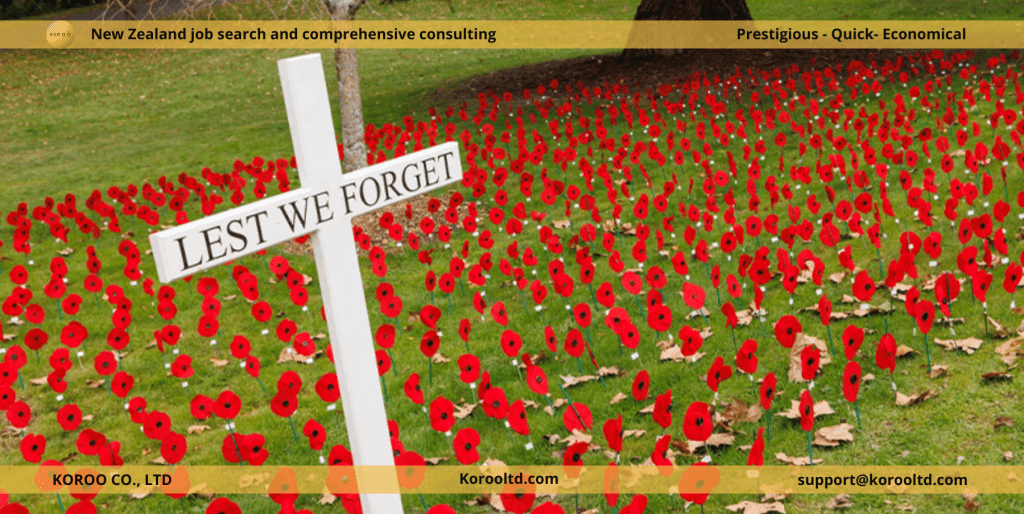
On ANZAC Day, red poppies bloom across New Zealand and Australia as a universal symbol of remembrance. Known as Flanders poppies, they were among the first flowers to grow in the battlefields of Flanders, northern France. The poppy’s significance was immortalized in the poem “In Flanders Fields” by Lt. Col. John McCrae, becoming a tribute to the unknown graves of fallen soldiers.
Since 1921, ANZAC Day has been a time for every New Zealander to reflect on the sacrifices made for peace and freedom. More than just a day off, it is a sacred national holiday that brings communities together in honor, remembrance, and unity.
Whether you’re attending a dawn service, baking ANZAC biscuits, or simply wearing a red poppy, you’re participating in one of New Zealand’s most meaningful traditions.
Discovery the Beautiful New Zealand, finding job opportunity with KOROO. CONTACT NOW!