1. The Vietnamese Community in New Zealand
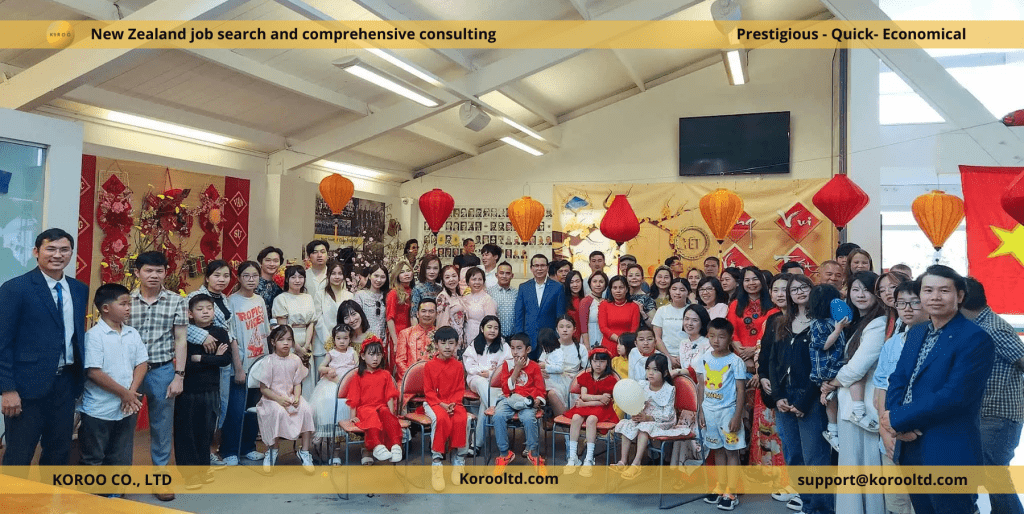
Before diving into the details of life in New Zealand, let’s take a quick look at some basic information about the Vietnamese community here. New Zealand is a country with a strong economy and a land area comparable to Vietnam, but with a much lower population density. As of December 2024, New Zealand’s population is around 5.2 million people, offering great opportunities for international citizens, including Vietnamese people, to study, work, and settle long-term.
Compared to other countries like Australia, Singapore, Japan, and South Korea, the Vietnamese community in New Zealand is not very large. The Vietnamese community in Auckland is estimated to be between 2,000 and 3,000 people, while other regions only have a few hundred. According to 2018 statistics, the total number of Vietnamese residents in New Zealand has surpassed 10,000, with the majority living in three major cities: Auckland, Christchurch, and Wellington.
2. Life of the Vietnamese Community in New Zealand
Life for the Vietnamese community in New Zealand is often described as comfortable and pleasant. Although international citizens may face some barriers regarding language, culture, and daily life when they first arrive in a new country, these challenges are not overwhelming. With a low population density and a calm, peaceful environment, New Zealand offers an ideal living space for those who enjoy tranquility.
The local people in New Zealand are friendly, open-minded, and willing to help international citizens. However, if you are someone who enjoys bustling, lively environments, New Zealand may not be the perfect choice. On the other hand, if you love majestic nature and a quiet lifestyle, New Zealand is certainly the ideal place for you.
2.1. Minimum Wage and Taxes in New Zealand
The minimum wage for workers aged 19 and above in New Zealand in 2024 is 29.66 NZD per hour. With this income, you will need to pay personal income tax ranging from 10% to 30%, depending on your income level.
- For income up to 14,000 NZD: Workers are taxed at 10.5% of their total income.
- For income from 14,000 to 48,000 NZD: Workers are taxed 1,470 NZD plus 17.5% of the amount over 14,000 NZD.
- For income from 48,000 to 70,000 NZD: Workers are taxed 7,420 NZD plus 33% of the amount over 48,000 NZD.
- For income from 70,000 to 180,000 NZD: Workers are taxed 14,020 NZD plus 33% of the amount over 70,000 NZD.
- For income over 180,000 NZD: Workers are taxed 50,320 NZD plus 39% of the amount over 180,000 NZD.
Although the cost of living in major cities like Auckland and Wellington is higher than in other areas, if you have specialized skills and experience, you can find higher-paying job opportunities. Additionally, New Zealand offers programs to support workers, such as housing subsidies, tuition assistance, and monthly allowances for those with low incomes, which can help make life more affordable.
2.2. Room Rental Costs
Although KOROO will assist you in finding the best accommodation in the beginning, here is some information about rental costs in New Zealand.
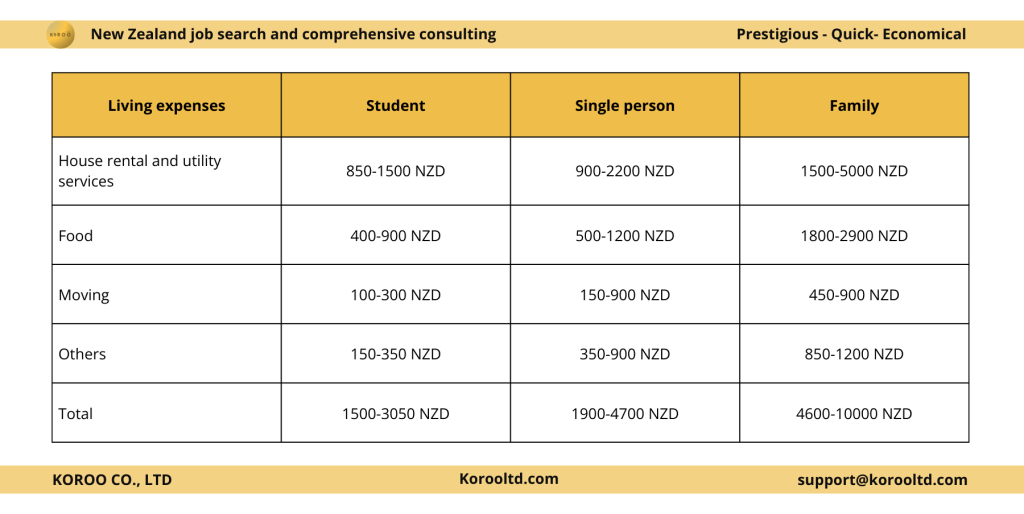
Rental prices for a room in Auckland range from 150 NZD to 350 NZD per week, depending on the location, size, and amenities of the room. If calculated monthly, rental prices will range from 600 NZD to 1,400 NZD per month. Areas farther from the city center, such as the west and south of Auckland, generally have lower rental prices. Therefore, if you’re looking to save on rent, you might consider searching for accommodation in these areas.
If you have a minimum wage income and choose to rent the most expensive room in Auckland, you may end up spending about 50% of your after-tax income on rent. However, if you work in high-paying sectors, your rental costs will be much more manageable.
Some Room Rental Websites in New Zealand:
- Trade Me Property: https://www.trademe.co.nz
- Flatmates: https://www.nzflatmates.co.nz/
- Rentola: https://rentola.co.nz/
- Roomies: https://www.roomies.co.nz/
- EK Property: https://ekproperty.co.nz/
- Nestpick: https://www.nestpick.com/rooms-for-rent/auckland/
2.3. Essential Food Costs
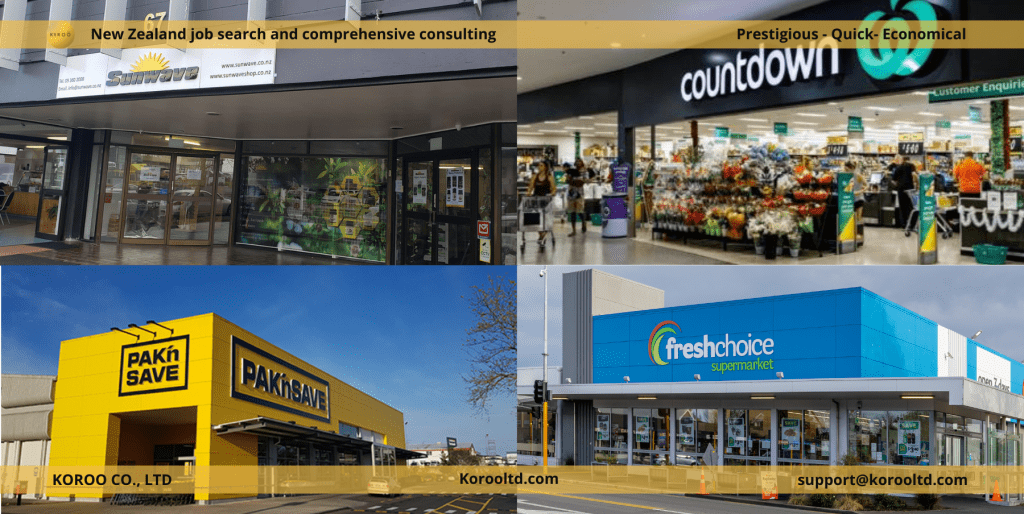
While living in New Zealand, you can buy essential food items at local retail stores and supermarkets such as Sunwave Vietnamese Supermarket, Countdown, Pak’n Save, New World, and Fresh Choice. These supermarkets offer a wide range of food products at affordable prices.
If you enjoy shopping at local markets, places like Farmers Markets or Sunday Markets are excellent spots to find fresh, locally sourced, and eco-friendly food.
2.4. Transportation Costs
In New Zealand, workers can use their valid Vietnamese driver’s license for the first year. After one year, it is mandatory to register and take a driving test at authorized institutions in order to continue driving.
Public transportation is well-developed and modern. On average, transportation costs range from 200 NZD to 600 NZD per month.
Conclusion
The cost of living in New Zealand varies depending on the city and area you live in. However, with reasonable spending, you can enjoy a stable life here. We wish you success in finding a suitable place to live and work in New Zealand!