In recent years, New Zealand has seen a strong outflow of skilled workers to Australia, particularly among young adults and middle-aged professionals. But is Australia truly the “dream destination” as many believe? Or do workers return home after finding the reality far different from expectations?
Let’s explore this question through a detailed comparison below.
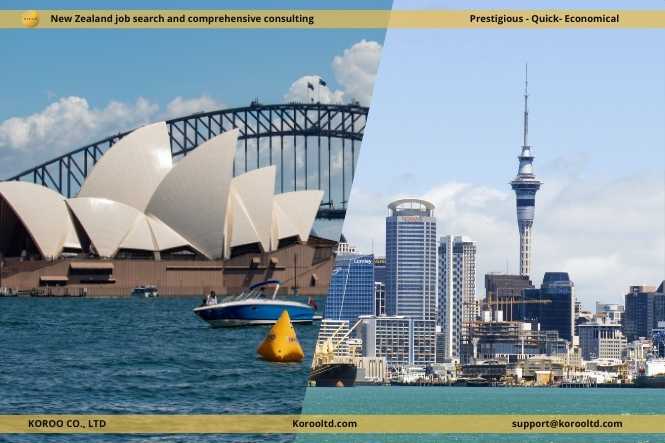
Geographic Location and Urban Landscape
- New Zealand: Located in the South Pacific, New Zealand is known for its mild climate, pristine environment, and breathtaking scenery. Major cities like Auckland, Wellington, and Christchurch balance modern infrastructure with a close connection to nature, making it an attractive choice for those seeking high-quality living.
- Australia: A much larger country geographically, and closer to Vietnam, Australia boasts dynamic cities like Sydney, Melbourne, and Brisbane. With well-developed transportation, healthcare, and education systems, it offers great convenience for workers and their families.
In terms of scale and connectivity, Australia has a clear advantage over New Zealand.
>>>>> Discover Unique Nature Experiences in New Zealand
Jobs and Wages
- New Zealand: Minimum wage is 23.5 NZD/hour, while the updated 2025 median wage is 33.56 NZD/hour. Key industries facing labor shortages include food processing, construction, engineering, agriculture, and healthcare.
- Australia: Minimum wage is slightly higher at 24.10 AUD/hour. Industries in demand include meat processing, construction, mechanical engineering, nursing, IT, and services.
Both countries operate skilled shortage policies to attract international labor.
Real Income: Earning Potential and Savings
- New Zealand: Average monthly income ranges from 4,500 – 5,300 NZD (65 – 75 million VND). With reasonable living costs, workers can typically save 25 – 35 million VND/month.
- Australia: Average monthly income is higher, around 5,000 – 6,000 AUD (80 – 95 million VND). However, higher living costs mean savings are only slightly better than New Zealand – approximately 5 – 10 million VND/month.
Housing Costs
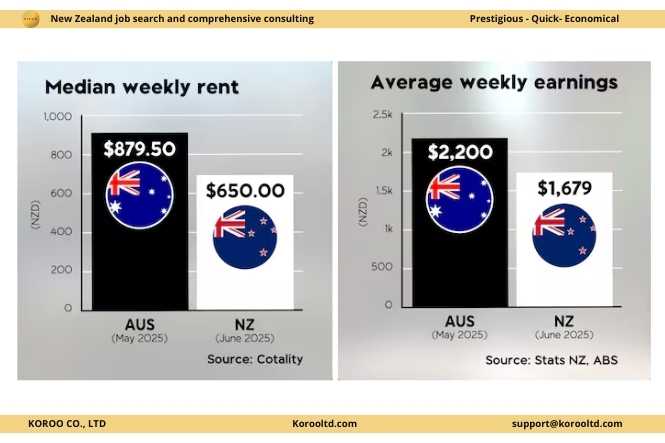
- New Zealand: Rental prices range from 250 – 400 NZD/week for a single room and 600 – 800 NZD/week for family housing.
- Australia: Rentals are higher, around 350 – 500 AUD/week for a single room and from 800 AUD/week for family housing in major cities.
New Zealand has a clear advantage in affordable housing and peaceful living.
>>>>> Renting a House in New Zealand: A Complete A-Z Guide for Beginners
Labor Migration and Job Opportunities
- New Zealand: Currently hosts over 110,000 migrant workers, mainly in agriculture, food processing, and services. The government continues to expand the Accredited Employer Work Visa (AEWV), making it easier for skilled workers to enter the market.
- Australia: Welcomes over 200,000 migrant workers annually, especially in healthcare, construction, and services. Australia also offers more permanent residency options, though with stricter English language requirements and higher settlement costs compared to New Zealand.
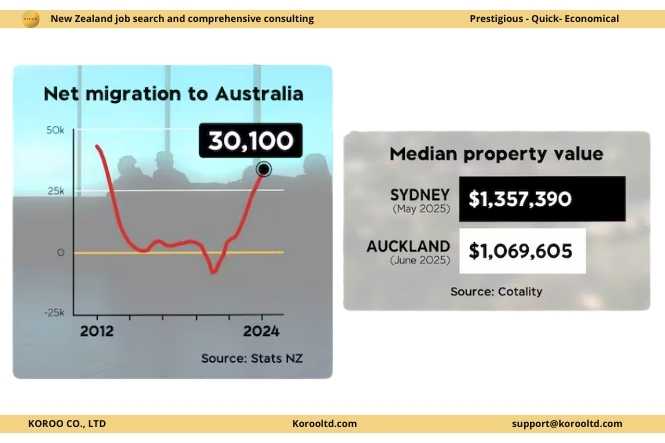
New Zealand or Australia – Which Should You Choose?
- New Zealand: Best for workers who value safety, affordable living costs, and a higher chance of residency through the Green List pathways.
- Australia: Attractive for its higher wages and diverse job opportunities, but comes with higher living costs and stricter entry requirements.
If you want higher wages and a competitive environment, Australia is a strong choice.
If you prefer quality of life, reasonable costs, and stable residency opportunities, New Zealand is the ideal destination.
Koroo – Supporting Vietnamese workers on their journey to employment and settlement in New Zealand & Australia.
CONTACT US NOW!
>>>>> Changes to New Zealand Visa: New Seasonal Pathways (2025)