Maori culture: Tattoos are more than just body art — for the Māori people, the indigenous population of New Zealand, tāmoko (traditional Māori tattoos) are sacred cultural symbols. They carry deep meanings and tell personal stories of identity, heritage, and life journeys.

Tāmoko: A Centuries-Old Cultural Tradition
Tāmoko has been a traditional tattooing practice among Māori for hundreds of years. Each design is like a personal résumé, marking key milestones in the wearer’s life — from genealogy and tribal roles to individual achievements and life events.
Today, tāmoko is not only a way to preserve tradition but also a proud expression of cultural identity. Many Māori choose to receive tāmoko on special occasions such as graduations, marriages, or in memory of a loved one.
Gender-Specific Tāmoko Practices

A unique feature of tāmoko is its placement — often tattooed on the face and body, with facial tattoos holding especially high ceremonial significance.
- For men, facial tattoos are called moko kanohi, covering the entire face or just the lower half. These designs represent maturity, status, and leadership within the community.
- For women, the most common form is moko kauae, tattooed on the chin and sometimes the lips. Today, women with moko kauae are often fluent Māori speakers and hold important cultural roles within their iwi (tribe).
Origins and Meanings Behind Common Tāmoko Motifs
Each tāmoko pattern goes beyond aesthetics — they are symbolic narratives of the wearer’s life. Common motifs include:
- Whānau (Family): Symbolizing unity, love, and responsibility.
- Mana (Authority, Honor): Reflecting status, self-respect, and leadership.
- Wairua (Spirituality): Representing faith, connection to ancestors, and the spiritual world.
The Modern Revival of Tāmoko
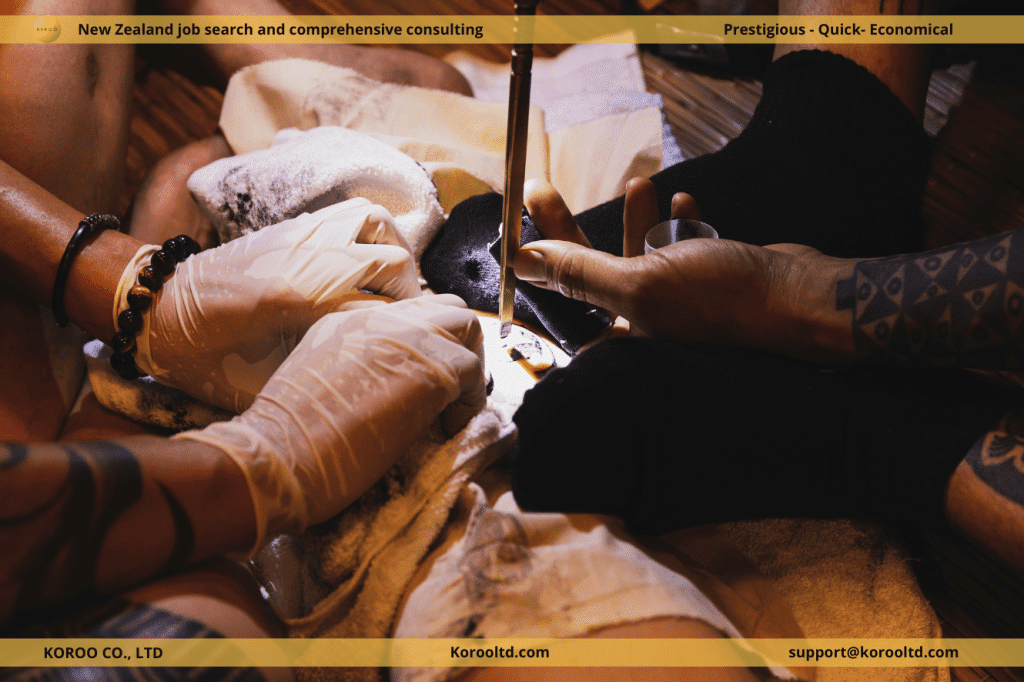
In the mid-19th century, tāmoko facial tattooing declined due to European colonization and Christian influence, which often viewed the practice as “uncivilized” and incompatible with religious beliefs.
However, in recent decades, there has been a strong cultural revival. The Māori community is reclaiming tāmoko as a vital expression of identity and pride. Today, many respected Māori leaders, artists, and entrepreneurs proudly wear moko kanohi or moko kauae — making bold cultural statements through their ink.
Kirituhi – A Way for Non-Māori to Honor Māori Culture
As interest in tāmoko has grown, a new form known as kirituhi has emerged — tattoos inspired by tāmoko, created specifically for non-Māori individuals. Unlike traditional tāmoko, kirituhi does not follow ceremonial protocols or sacred symbolism but still embraces the visual beauty and respectful acknowledgment of Māori design.
The Māori community appreciates when outsiders show genuine interest in learning and honoring their culture. However, it’s crucial that kirituhi is approached with respect, understanding, and done in consultation with Māori tattoo artists to ensure cultural integrity.
Māori tattoos — tāmoko — are not just artistic expressions; they are a living cultural heritage that reflects the personality, history, and spirit of a people. Whether you’re of Māori descent or simply drawn to this meaningful art form, understanding the origins and cultural significance of tāmoko is essential before getting inked.
>>>>> Exploring Māori Cultural Arts – A Unique Heritage of New Zealand
👉 Interested in New Zealand’s culture or planning to explore the country? Reach out to Koroo, CONTACT US for more insights and guidance on visas, studying abroad, or immigration support — we’re here to help!